Budgeting During Displacement: How to Manage Finances While Out of Your Home
Learn how to manage your day-to-day spending while temporarily out of your home — including tips for tracking hotel stays, meals, and covered living expenses.
Budgeting During Displacement: How to Manage Finances While Out of Your Home
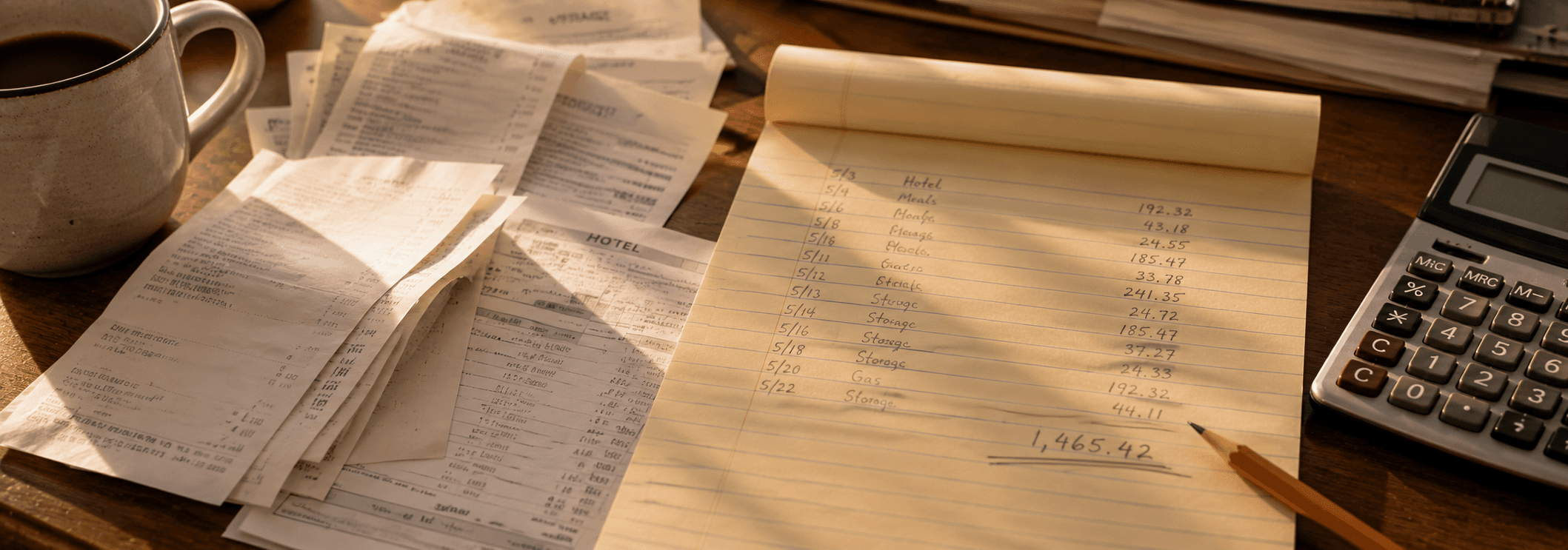
Displacement after a covered loss is financially stressful in a specific and predictable way: costs accumulate faster than reimbursements arrive. Hotels, meals, storage, and emergency purchases pile up immediately. ALE reimbursements typically arrive 2-4 weeks after submission. In the gap, you're carrying real money out of pocket.
A displacement budget built in the first 48 hours — before you've committed to housing, before you've started accumulating expenses — is the most practical tool for managing that gap.
What Do You Need to Know Before You Commit to Anything?
Before signing a rental agreement or booking a long-stay hotel, confirm two numbers from your insurer:
Your ALE dollar limit. This is the ceiling — typically 20-30% of your Coverage A dwelling limit. On a $350,000 Coverage A, a 20% ALE limit is $70,000. That sounds like a lot until you've committed to a $3,800/month rental for a 10-month repair.
Your ALE time limit. Many policies cap ALE duration independently of the dollar limit — commonly 12-24 months. If your policy has an 18-month cap and repairs run 22 months, you're without ALE coverage for the final four months regardless of how much dollar limit remains.
Both numbers are on your declarations page. Knowing them before committing to housing — not after — is the decision that prevents the most common financial surprises.
How Do You Establish Your Normal Expense Baseline?
ALE covers the increase in your living costs — not your total displacement expenses. To calculate the increase, you need the baseline.
Pull 3-6 months of bank statements and credit card records from before the loss. Calculate your average monthly spending in each displacement-relevant category:
- Housing (mortgage or rent payment)
- Food (groceries and dining)
- Utilities
- Transportation and commuting
Write down the monthly averages. This baseline is what you'd spend if the loss hadn't happened. Everything you spend above it during displacement is potentially ALE-eligible.
How Do You Build a Realistic Monthly Displacement Budget?
With your ALE limit and baseline in hand, build a monthly budget covering the expected displacement period:
Housing: What will you actually pay for temporary housing, and what portion exceeds your normal housing cost? That excess is your ALE-eligible housing amount.
Food: What do you realistically expect to spend on meals during displacement? What's your normal food baseline? The difference is your ALE-eligible food amount.
Other ALE: Storage, laundry, pet boarding, additional transportation. Estimate monthly costs for each.
Non-ALE costs: Your mortgage payment on the damaged home, your normal utilities (which continue), and any expenses that don't qualify. These come entirely out of pocket.
Total your projected monthly costs — ALE-eligible and non-ALE combined. Divide your ALE limit by the ALE-eligible monthly total to project how many months your coverage may support. Compare to the expected repair timeline. If the math doesn't work, adjust housing choices now rather than discovering the shortfall in month nine.
How Do You Manage the Cash Flow Gap?
ALE reimbursements arrive 2-4 weeks after submission. If you're submitting monthly, you're consistently carrying 4-6 weeks of expenses before reimbursement. Practical strategies to manage the gap:
Pay with a credit card where possible. Expenses go on the card now; the statement comes later; reimbursement arrives before the payment is due. This creates a natural 30-day buffer between expense and cash outflow.
Use a single dedicated card for ALE expenses. One card for everything ALE-related produces one statement that captures your complete expense record. Easier to submit, easier to track, harder to miss items.
Submit bi-weekly rather than monthly. More frequent submissions produce more frequent reimbursements. Halving the submission interval roughly halves the average out-of-pocket balance you're carrying at any given time.
Ask about advance ALE payments. For displacements expected to exceed six months, ask specifically whether your insurer will provide an advance ALE payment for anticipated housing costs. Some will. The answer is always no if you don't ask.
What Should You Monitor Throughout the Claim?
Your ALE running total. How much have you submitted and been reimbursed for? How much remains in your limit? What's your projected monthly spend rate, and how long does the remaining limit last at that rate?
Your repair timeline. Is the expected completion date moving? Every extension is additional ALE consumption. If scope disputes or insurer delays are extending the timeline, document them — insurer-caused delays are the strongest basis for an ALE extension request.
Reimbursement timing. If submissions are taking longer than 3-4 weeks to produce reimbursement, follow up in writing. Reimbursement delays compound the cash flow gap and may signal a processing problem worth addressing.
Frequently Asked Questions
How much should I budget for food during displacement? A reasonable starting estimate: your normal food budget plus 40-60% for the increased cost of restaurant meals and limited cooking facilities. The ALE-eligible portion is only the increase above baseline — but you need to plan for the total to avoid cash flow surprises.
What if my ALE runs out before repairs are done? You bear the cost of housing beyond your ALE limit. Prevention is the real answer: knowing your limit, monitoring your consumption rate, and choosing housing that extends your limit rather than exhausting it quickly. If you're approaching your limit with repairs still incomplete, contact your insurer in writing about an extension — particularly if delays are insurer-caused.
Should I tap into savings during displacement? If needed, yes — but with a plan for replenishment. ALE reimbursements will come; the question is timing. Using savings to bridge the gap between expense and reimbursement is reasonable. Depleting savings entirely without a plan creates vulnerability if unexpected expenses arise late in the claim.
Can I get a personal loan to cover displacement costs? Some homeowners do use personal loans or home equity lines to bridge cash flow during long displacements, particularly when ALE reimbursements are running behind. The interest cost is worth comparing against the alternative — credit card debt at higher rates. For total losses, some lenders offer specific construction bridge products.
How do I handle the financial stress of a long displacement? Financially: build the budget, track the numbers, submit frequently, and know your limit before it surprises you. Practically: reduce variable costs where possible (extended-stay vs. hotel, cooking where you can), and accept that the gap between spending and reimbursement is a predictable feature of the process, not a signal that something is wrong.
Displacement Budget Checklist
- Know your ALE dollar limit and time limit before committing to any housing — both numbers are on your declarations page
- Pull 3-6 months of pre-loss bank statements to establish your normal expense baseline
- Build a monthly displacement budget: ALE-eligible expenses and non-ALE costs separated
- Divide ALE limit by monthly ALE spend to project coverage duration — compare to expected repair timeline
- Pay ALE expenses with a dedicated credit card for automatic record-keeping
- Submit bi-weekly rather than monthly to reduce cash flow gap
- Track ALE running total against your limit continuously — know your balance before it runs out
- Ask your insurer about advance ALE payments for long claims
ClaimEase provides general guidance. Coverage determinations are made by your insurer. Consult a licensed public adjuster or attorney for specific advice about your claim.