Common ALE Claim Denials — and How to Respond
Reasons for ALE denials and steps to correct or appeal them.
Common ALE Claim Denials — and How to Respond
Additional Living Expense claims are among the most frequently disputed, reduced, or partially denied in the homeowners insurance process. The reasons are predictable — and in most cases, correctable with the right documentation and a specific written response.
Here's what's actually happening in each common denial scenario and exactly how to push back.
Why Are ALE Claims Disputed More Than Other Claim Types?
ALE reimbursement depends on ongoing documentation of expenses that accumulate over months — often while homeowners are stressed, displaced, and managing repairs simultaneously. Unlike a structural damage claim where the damage is photographed once and fixed, ALE requires continuous documentation across dozens of individual expenses. Gaps in that documentation are common, and insurers flag them.
The good news: most ALE denials are based on documentation problems, not coverage problems. That means most of them are fixable.
Denial 1: Missing or Insufficient Receipts
What the denial looks like: Specific line items reduced or denied because documentation is missing, incomplete, or unclear.
Why it happens: Paper receipts get lost. Email confirmations don't get saved. Bank statements get submitted without linking them to specific expenses.
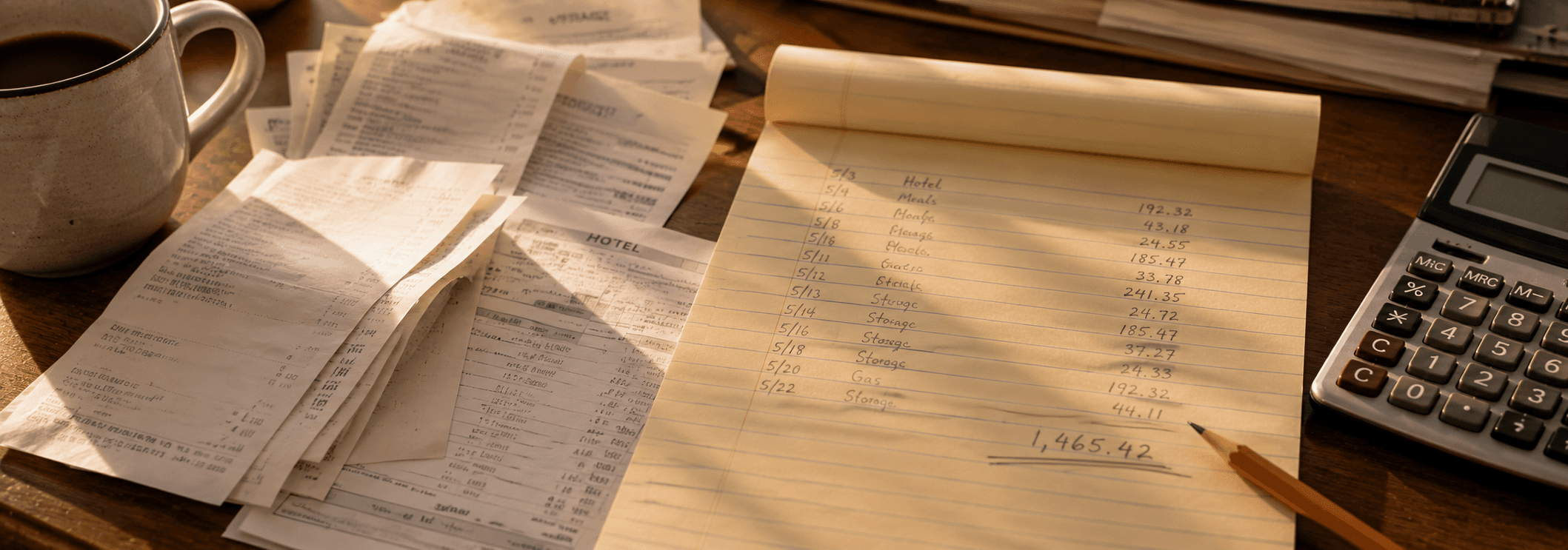
How to respond: For past expenses, reconstruct what you can. Bank and credit card statements showing vendor, date, and amount substitute for paper receipts in most cases — submit them with a brief written explanation linking each transaction to the claimed expense. Hotel booking confirmations and rental agreements serve as receipts for accommodation costs. For expenses with no documentation, submit a written declaration of the expense with as much detail as possible and ask the insurer to tell you specifically what documentation would satisfy the requirement.
Going forward: photograph every receipt the moment it's in your hand, before you leave the point of sale.
Denial 2: Expenses Deemed "Not Additional"
What the denial looks like: The insurer argues a claimed expense represents your normal living cost rather than an increase caused by displacement.
Why it happens: ALE covers the increase above baseline, not total expenses. Insurers will deny expenses they believe you would have incurred regardless of the displacement.
How to respond: Submit your pre-loss baseline documentation — bank statements from the 3-6 months before the loss showing your normal spending patterns. Then document the comparison: "My normal monthly grocery spend was $680. My displacement-period food expenses were $1,240. The ALE-eligible increase is $560/month." Specific, documented comparisons are very difficult to deny.
Denial 3: Housing Deemed "Not Comparable"
What the denial looks like: Your insurer reimburses a lower amount than what you paid, citing that your housing choice was more expensive than necessary given your pre-loss home.
Why it happens: Insurers apply a "comparable replacement" standard — temporary housing should match your pre-loss home in size and quality, not significantly exceed it.
How to respond: If your housing was reasonably comparable to your home, document it — square footage, bedroom count, neighborhood. If you're in a tight market after a regional disaster where affordable alternatives genuinely weren't available, document the market conditions. Screenshots of available rentals at the time you were searching, dated, showing that comparable alternatives didn't exist at lower price points. Insurers have difficulty defending a comparability reduction when you can show nothing comparable was available.
Denial 4: Expenses After Declared Habitability
What the denial looks like: Your insurer stops covering ALE because they've declared your home habitable — before you believe it actually is.
Why it happens: "Habitable" from the insurer's perspective may mean the structure is intact, even if the home lacks functional HVAC, has unresolved moisture issues, or fails basic livability standards.
How to respond: Get the uninhabitable condition documented in writing — a contractor statement identifying specific incomplete or non-functional systems, a building department inspection noting outstanding issues, or an air quality assessment if contamination is a factor. Submit this documentation with a written dispute of the habitability determination. "The home lacks functional heat, which is a safety issue in current temperatures. Our contractor confirms this will not be resolved until [date]" is a documentable, disputable basis.
Denial 5: Expenses Outside Covered Categories
What the denial looks like: Specific expense types denied because the insurer determines they don't fall within ALE coverage.
Why it happens: Sometimes correctly — the expense genuinely doesn't qualify. Sometimes incorrectly — the insurer applies an overly narrow interpretation of what ALE covers.
How to respond: Ask for the denial in writing with the specific policy language cited. Review your policy's Coverage D definition. Many ALE definitions are broad — "necessary increase in living expenses" — which covers a wide range of displacement costs. If your policy language supports the expense and the insurer's denial doesn't cite a specific exclusion, that's a disputable determination. Respond with the specific policy language and a clear explanation of why the expense qualifies.
Denial 6: ALE Limit Exhausted
What the denial looks like: The insurer informs you that your ALE payments have reached your policy's Coverage D limit.
Why it happens: ALE limits — typically 20-30% of Coverage A — can run out before repairs are complete, particularly on long, complex claims.
How to respond: A legitimately exhausted limit is very difficult to appeal. If the exhaustion was accelerated by insurer-caused delays — scope disputes, supplement negotiations, adjuster non-responsiveness — document that timeline and request an extension in writing, citing the insurer's role in extending your displacement. Otherwise, the practical response is prevention: knowing your limit and monitoring cumulative spending throughout the claim rather than discovering the shortfall at the end.
How to Structure a Formal ALE Appeal
Every ALE appeal should follow the same structure:
- Request the denial in writing with the specific policy language cited — never accept "not covered" without a specific reason
- Review your Coverage D definition against the denial rationale
- Compile the specific documentation that addresses the denial reason — not general documentation, but specifically what the denial requires
- Submit a written response addressing each denial reason individually, with supporting documentation attached
- Request a written response within 10-15 business days
- If unresolved after two rounds, consider a public adjuster or insurance attorney for significant amounts
Frequently Asked Questions
Can I appeal an ALE denial after the claim is closed? Potentially — many policies allow supplemental claims for additional covered expenses discovered after initial closure, and ALE disputes can sometimes be reopened. The specific window varies by policy and state. Act as soon as you receive a denial rather than waiting until settlement.
What if I don't have any documentation for an expense? Submit what you have — a written declaration describing the expense with dates, amounts, and purpose — and ask the insurer what documentation they would accept. Some insurers accept written declarations for small expenses with no paper trail; others require some form of third-party record. Better to ask than to assume the expense is unrecoverable.
How do I know if my ALE denial is based on documentation or on a coverage interpretation? Ask. Request the specific denial reason in writing. "Insufficient documentation" and "expense not covered under Coverage D" are very different problems with very different responses. The specific denial reason determines your response strategy.
Is it worth hiring a public adjuster for ALE disputes? For ALE disputes totaling $5,000 or more that aren't resolving through the standard process, a public adjuster experienced in ALE claims often recovers more than their fee. Below that threshold, self-managed appeals with good documentation typically produce adequate results.
Can my insurer reduce ALE reimbursements without notice? They can adjust individual line items when reviewing submissions, but significant reductions should come with an explanation. If your reimbursement comes in materially below your submission without explanation, request an itemized accounting of what was approved, reduced, and denied — and why.
ALE denials feel final, but most aren't. The majority are documentation problems with a specific fix, or coverage interpretations with a specific counter-argument. The homeowners who recover what they're owed are the ones who ask for the specific denial reason, respond to that specific reason with specific documentation, and don't accept the first "no" as the final answer.
ClaimEase provides general guidance. Coverage determinations are made by your insurer. Consult a licensed public adjuster or attorney for specific advice about your claim.