How to Build a Reimbursement Binder for Your Insurance Claim
Organizing proof of expenses for easy reimbursement processing.
How to Build a Reimbursement Binder for Your Insurance Claim
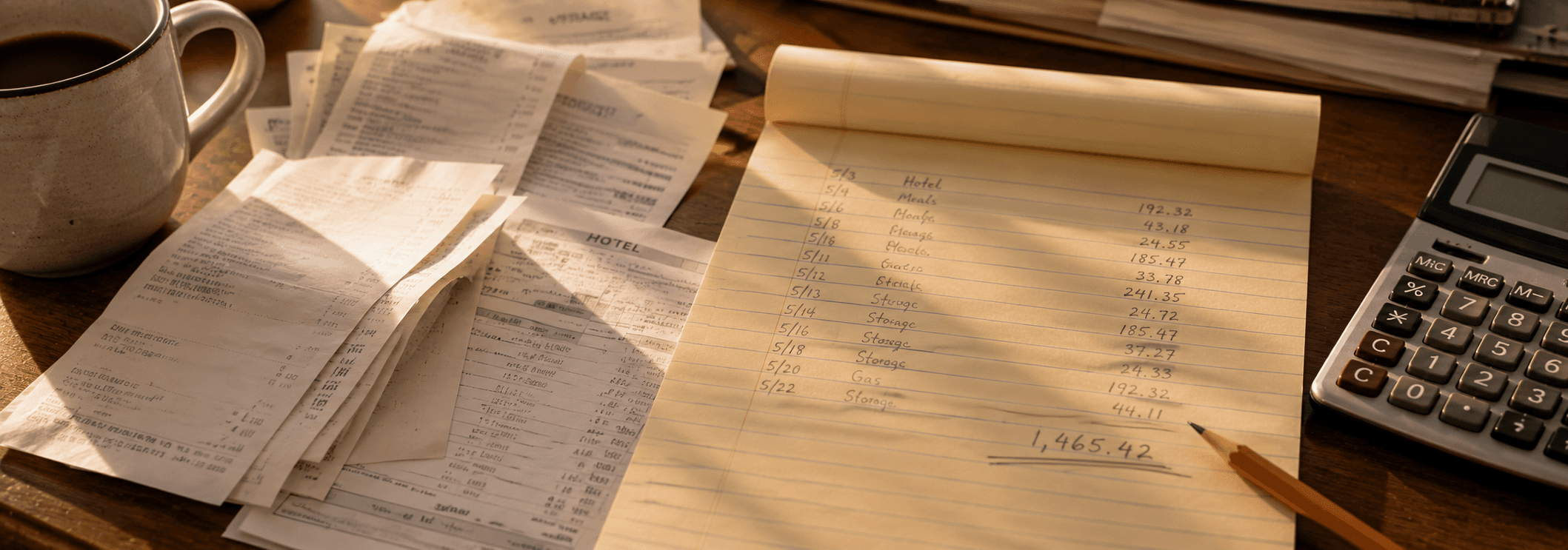
When you submit expenses for reimbursement — ALE, emergency mitigation, or repair costs — the quality of your documentation package directly affects how quickly and completely you get paid. A disorganized, incomplete submission invites delays, partial payments, and requests for additional documentation that extend the process by weeks.
A reimbursement binder is your organized, submission-ready record of everything you've spent and everything you're owed. Here's exactly how to build one.
Why Does Organization Affect What You Get Reimbursed?
Insurers review hundreds of reimbursement submissions. A submission that makes the reviewer's job easy — clearly organized, properly categorized, with every expense documented — gets processed faster and challenged less than one that requires them to sort through unsorted receipts and fill in missing information themselves.
More importantly, a well-organized submission prevents legitimate expenses from being missed or excluded simply because they were buried, miscategorized, or insufficiently documented. Reimbursement requires the insurer to approve what you submit. What you don't submit clearly, you often don't recover.
What Are the Core Sections of a Reimbursement Binder?
Structure your binder around expense categories — each one maps to a different coverage section with different rules and limits:
Section 1: Additional Living Expenses (ALE / Coverage D)
- Hotel and short-term rental receipts with dates of stay
- Meal receipts for expenses above your normal food budget — note your typical baseline so the increase is documentable
- Laundry and dry cleaning (when displaced without your normal facilities)
- Pet boarding or kennel fees
- Storage unit rental
- Mileage logs for additional commuting caused by displacement (hotel farther from work than your home)
Section 2: Emergency Mitigation (Coverage A)
- Water extraction and drying equipment invoices
- Tarp and board-up service receipts
- Emergency plumbing or roofing repair invoices
- Temporary fence or security receipts
- All contractor invoices with license numbers and dates
Section 3: Repair and Restoration
- All contractor estimates and signed contracts
- Materials receipts if you purchased directly
- Permit fees
- Engineer or inspection fees
Section 4: Contents and Personal Property
- Damaged item inventory with descriptions, ages, and values
- Purchase receipts or records for damaged items where available
- Photos of damaged property in place before disposal
- Disposal authorization from your insurer where obtained
Section 5: Communications Record
- Chronological log of all claim-related conversations
- Copies of all written communications sent and received
- Claim number, adjuster contact information, insurer contact details
What Makes Each Receipt Submission-Ready?
A receipt alone is often insufficient. For each expense, your submission should be able to answer:
- What was it? The expense type and description
- When was it? The date of the expense
- Why was it necessary? Connection to the covered loss and displacement
- How much was it? The exact amount, with tax if applicable
- What coverage category does it fall under? ALE, mitigation, or repair
For meal reimbursements: note your normal monthly food budget alongside the displacement-period food expenses. ALE covers the increase — the insurer needs the baseline to calculate it.
For mileage: log the date, origin, destination, purpose, and miles. A simple note — "Extra commute to work from hotel: 14 miles roundtrip above normal, 45 days" — is a reimbursable mileage claim most homeowners never make.
How Do You Submit Reimbursements Effectively?
Submit in organized batches rather than piecemeal. A submission that covers 30 days of expenses, organized by section, with a cover sheet summarizing the total by category is processed faster than 30 individual submissions.
Include a cover sheet for every submission:
- Your name, claim number, and property address
- Date range covered by the submission
- Total by category (ALE: $X, Mitigation: $X, etc.)
- Grand total requested
- List of attached documentation
Send with read receipt or delivery confirmation. If submitting by email, request a read receipt. If by mail, send certified. You need a record that the submission was received on a specific date.
Follow up if you don't receive acknowledgment within 10 business days. Ask for written confirmation that the submission is under review and the expected processing timeline.
What Should You Never Mix in the Same Submission?
ALE and repair expenses must be submitted separately and tracked separately. They fall under different coverage categories with different limits — Coverage D for ALE, Coverage A for repairs. Mixing them creates categorization problems that delay processing and can result in expenses being applied against the wrong limit.
Similarly, emergency mitigation and permanent repair expenses should be kept separate — they may be reimbursed through different channels and require different documentation.
Frequently Asked Questions
How often should I submit for ALE reimbursement? Monthly submissions are standard — organized by calendar month, covering all ALE expenses for that period. Some homeowners submit more frequently for large expenses. Less frequently than monthly means you're carrying more out-of-pocket exposure at any given time.
What if I lost some receipts? Bank and credit card statements can substitute for missing receipts in many cases — they show the date, amount, and vendor. Some insurers accept these; ask your adjuster in advance. For recurring expenses like a monthly rental, the lease agreement plus a bank statement showing payment is typically sufficient documentation.
Do I need to submit receipts for every meal? For most claims, yes — meal reimbursements require documentation of actual expenses. Some insurers accept a daily meal allowance approach for extended displacements; ask your adjuster whether they have a preferred method before you start tracking.
Can I submit for expenses I paid months ago? Yes — back-dating submissions to the date of loss is appropriate. Your ALE limit runs from the date of loss, and you can claim expenses incurred from that date even if you're only now organizing your documentation. Don't leave early-displacement expenses behind because you weren't organized at the start.
What if the insurer rejects a reimbursement item? Ask for a written explanation citing the specific reason for rejection. If you believe the expense qualifies, respond in writing with your policy language and documentation. Many initial rejections on ALE expenses are reversed when the homeowner provides clearer documentation or a specific policy citation.
Reimbursement Binder Checklist
- Create five sections: ALE, emergency mitigation, repairs, contents, and communications
- For every receipt: document what, when, why, how much, and which coverage category
- For meal claims: note your normal food baseline so the increase is calculable
- For mileage: log date, origin, destination, purpose, and miles
- Include a cover sheet summarizing totals by category with every submission
- Submit in organized monthly batches, not piecemeal
- Send with delivery confirmation — email read receipt or certified mail
- Follow up in writing if no acknowledgment within 10 business days
- Never mix ALE and repair expenses in the same submission
ClaimEase provides general guidance. Coverage determinations are made by your insurer. Consult a licensed public adjuster or attorney for specific advice about your claim.