Signing a Release Too Early: A Costly Mistake to Avoid
Signing an insurance release before your claim is fully resolved can waive rights worth thousands. Here's what to watch for.
Signing a Release Too Early: A Costly Mistake to Avoid
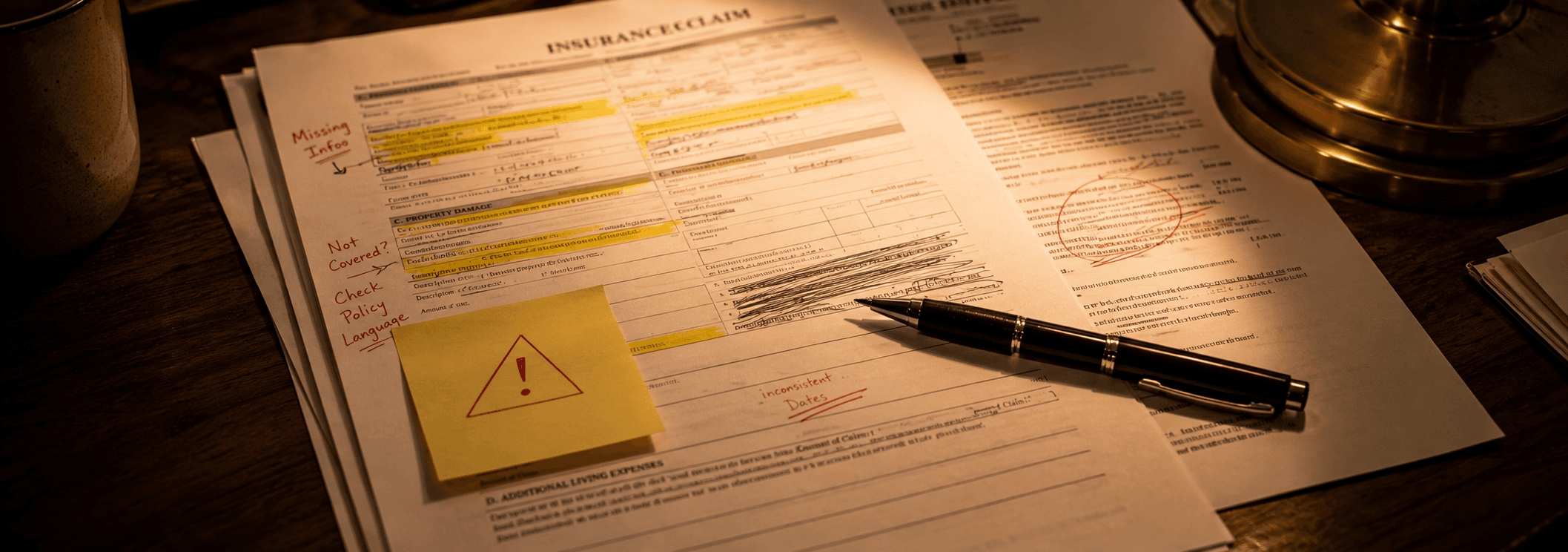
Of all the mistakes homeowners make during insurance claims, signing a release prematurely is among the most consequential and the least reversible. A release waives your legal right to pursue additional compensation under that claim — and once signed, reversing it typically requires proving fraud, misrepresentation, or mutual mistake in court.
Most homeowners who sign releases too early don't realize they're signing a release at all.
What Is a Release?
A release is a legal document by which you agree that the payment you've received is full and final satisfaction of your claim — and that you waive any right to pursue additional compensation under that claim in the future.
Releases serve a legitimate purpose: at the end of a fully resolved claim, they provide the insurer closure and the homeowner finality. The problem is when they're presented — explicitly or embedded — before the claim is actually resolved.
How Do Releases Appear Without Looking Like Releases?
This is the most important thing to understand: releases don't always look like separate, obviously labeled documents.
Check endorsement language. Some insurers print settlement language directly on the back of the check — in the endorsement area where you sign to deposit it. "By endorsing this check, payee agrees this payment constitutes full and final settlement of all claims related to claim number XXXXX arising from the [date] loss event." Signing the back to deposit the check may constitute agreement to those terms even if you never read them. Read the back of every check before endorsing it.
Cover letter language. A transmittal letter saying "enclosed please find our full and final payment in settlement of all claims arising from the [date] loss event" is presenting a release through a letter. If you deposit the check without objecting to this language, you may be treated as having accepted the settlement terms.
Formal release documents. Labeled "Release and Settlement Agreement," "Full and Final Release," "Satisfaction of Claim," or "Accord and Satisfaction." These are explicit and require a separate signature.
Settlement agreements embedded in claim closing forms. Some insurers include release language in forms labeled as claim status forms or completion certifications.
When Is It Safe to Sign a Release?
A release is appropriate when all of these conditions are true:
- All damage has been fully assessed — including anything discovered during repair work
- All supplemental claims have been filed and resolved
- You have received or confirmed in writing the amount of your recoverable depreciation and your plan for recovering it
- All ALE reimbursements for the displacement period are resolved
- You've independently evaluated the settlement amount and believe it's fair
- You understand exactly what rights you're waiving
If any of these conditions aren't met, the release is premature.
What Should You Do When Presented With a Release?
Read everything. Before you endorse a check or sign any document, read it completely. If you don't have time to read it, don't sign it yet.
Ask specifically in writing: "Does signing this document or endorsing this check close my claim and waive my right to supplemental claims, recoverable depreciation, or additional ALE reimbursements?" Get a written answer before you sign.
Take time. You are never required to sign a release on the spot. There is no legitimate urgency that requires waiving your rights in the moment. If you're being pressured to sign immediately, that's a signal to slow down.
Cross-referencing against your actual claim status. Before signing any final release, review the status of your claim: Is the scope finalized? Are supplemental claims pending? Have you filed for and received recoverable depreciation? Is displacement ongoing? If anything is outstanding, the release is premature.
What If You've Already Signed Something?
If you've already signed a release and believe you gave up rights you didn't intend to waive, consult an insurance attorney promptly. This is a general description of a doctrine that applies differently across states and is not a statement of the law where you are. A signed release can be challenged in limited circumstances — fraud, mutual mistake, misrepresentation, duress — but this requires legal action, carries significant uncertainty, and has a narrow window. Earlier is much better than later.
Frequently Asked Questions
What is "accord and satisfaction" and how does it relate to releases? This is a general description of a doctrine that applies differently across states and is not a statement of the law where you are. Accord and satisfaction is a legal doctrine that extinguishes a claim when a debtor offers full payment "in satisfaction" and the creditor accepts it. If a check's memo line or cover letter says "in full satisfaction" and you deposit it, some courts treat that as settlement acceptance under this doctrine. State laws vary. Read before depositing.
Can I cross out release language on a check before endorsing it? This approach has inconsistent legal results and is not a reliable protection strategy. If you're uncomfortable with check endorsement language, contact your insurer in writing before depositing and ask them to reissue without that language. Get their response in writing.
What if my mortgage servicer has already endorsed the check — do I still have to worry about release language? Yes — your own endorsement is what binds you. Review any language on the check before you endorse it, regardless of whether your servicer has already signed.
Is it ever okay to accept an ACV payment before the claim is fully resolved? Yes — accepting an ACV payment under an RCV policy is a normal part of the process and doesn't close the claim as long as you haven't signed a release. Confirm this with your insurer in writing before accepting any significant payment.
What rights do I retain after accepting an ACV payment without signing a release? Typically: the right to file supplemental claims for additional damage discovered during repairs, the right to claim recoverable depreciation after repairs are documented, and the right to continue ALE claims if still displaced.
Release Safety Checklist
- Read the back of every insurance check before endorsing — release language sometimes appears there
- Read cover letters and transmittal documents for settlement language before depositing any check
- Ask in writing: "Does this payment close my claim and waive supplemental, depreciation, or ALE rights?"
- Verify before signing: all supplements resolved, depreciation addressed, ALE resolved, settlement evaluated
- Take time — there is no legitimate reason to sign a final release on the spot
- For significant claims, have a public adjuster or attorney review a release before signing
- If you've already signed prematurely, consult an insurance attorney immediately
ClaimEase provides general guidance. Coverage determinations are made by your insurer. Consult a licensed public adjuster or attorney for specific advice about your claim.